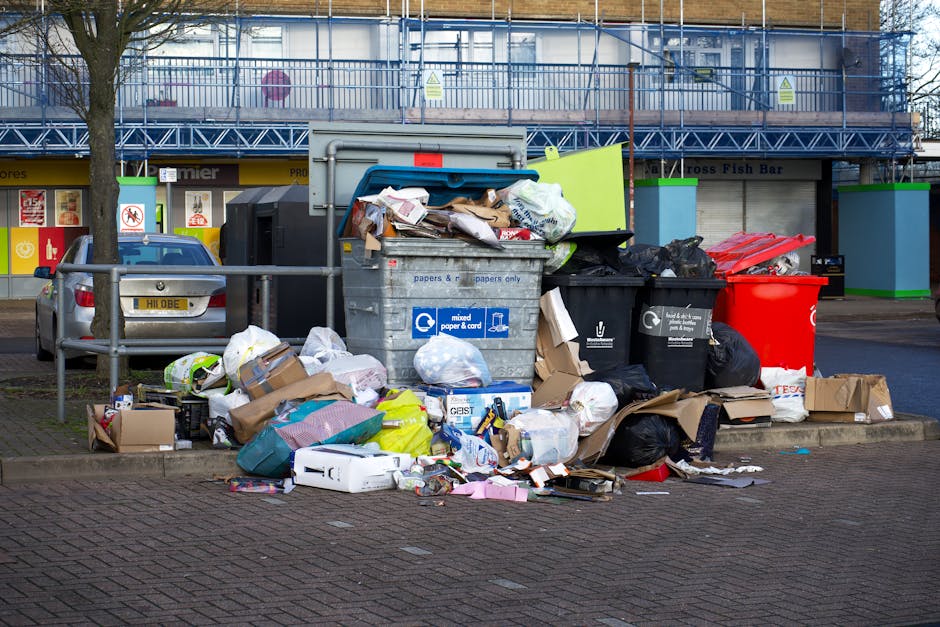
Do I need a permit for rubbish removal in Knightsbridge
Posted on 21/10/2026
If you are clearing out a flat, replacing furniture, or dealing with builders' debris, the first question is usually the practical one: do I need a permit for rubbish removal in Knightsbridge? The honest answer is, sometimes yes, sometimes no - and the difference depends less on the rubbish itself and more on how it is being removed, where it is being left, and whether a vehicle, skip, or public highway is involved.
Knightsbridge is not the easiest place to move waste around. Narrow streets, controlled parking, busy pavements, and property access issues can all change what is required. A simple lift-and-load collection from private property is very different from putting a skip on the road outside. This guide breaks it down clearly, so you can avoid delays, extra costs, and the sort of awkward mistake that turns a tidy clearance into a minor headache.
We'll cover the permit question from every angle: when a permit is needed, when it usually is not, how the process works in practice, and what to check before booking a collection. If you want a broader view of local services while you read, you may also find waste disposal in Knightsbridge and the services overview helpful.

Why Do I need a permit for rubbish removal in Knightsbridge Matters
Permit rules matter because rubbish removal is not just about taking things away. In Knightsbridge, the logistics often determine the legal and practical requirements. If waste is being placed on a public road, pavement, or shared access route, that can trigger permissions. If a vehicle must stop in a restricted bay, on double yellow lines, or in a controlled parking zone, there may be separate parking or loading restrictions to think about.
That is where people get caught out. They assume "removal" means "one simple booking," but in London, access is often the real issue. A clearance from a mews property at 8am is not the same as a ground-floor collection from a private driveway. The waste may be identical; the permit question may be completely different.
There is also a quality-of-service angle. The right paperwork and planning can mean a smoother collection, fewer surprises, and less time spent waiting around with bags, furniture, or rubble cluttering up the hallway. In a busy area like Knightsbridge, a small delay can snowball into a bigger one. Let's face it, nobody wants a skip sitting outside their building longer than needed.
For project-heavy jobs such as refurbishments or partial rip-outs, it can help to look at dedicated pages like builders waste disposal in Knightsbridge or Knightsbridge builders waste disposal. Those types of jobs are the ones most likely to run into permit and access questions.
How Do I need a permit for rubbish removal in Knightsbridge Works
The easiest way to think about it is this: the need for a permit usually depends on whether waste removal affects public space or controlled access.
If rubbish is collected directly from private property and loaded straight into a licensed waste vehicle, you may not need a permit at all. But if you need to place a skip, drop a container, or have a vehicle occupy a road space for loading, permissions can come into play. In some cases, a parking suspension or bay suspension may be needed rather than a classic "permit" in the everyday sense.
There is a subtle but important distinction here. Many people use the word permit to cover everything, but in practice there are different approval types depending on the setup. A skip on the road is one scenario. A wait-and-load rubbish collection is another. A large commercial clearance with timed loading access is another again. They can all be handled differently.
In a place like Knightsbridge, access is often the deciding factor. Basement flats, porters, concierge rules, service entrances, and tight loading windows can all shape what is possible. A crew may be able to complete the job without any permit if everything stays on private land. If not, the plan needs to be checked properly before the day of the collection.
If access is part of your concern, it is worth reading this guide to access problems for Knightsbridge rubbish removal. It covers the kind of practical issues that often matter more than the waste type itself.
Key Benefits and Practical Advantages
Sorting the permit question early brings a few real benefits, and they are not just administrative. Here is what you gain when you plan properly.
- Fewer delays: If a parking bay, loading bay, or road position is already arranged, the team can get on with the work without sitting around waiting for an answer.
- Lower risk of fines or refusal: Bad parking choices or unauthorised placement can lead to issues that are expensive and annoying.
- Cleaner scheduling: This matters a lot for builders, landlords, estate managers, and anyone coordinating trades.
- Less stress on the day: You do not want to discover at 7:30 in the morning that a collection lorry cannot stop where you thought it could.
- Better price clarity: When permit and access needs are confirmed in advance, quotes tend to be clearer and more realistic.
There is also a quality angle that people often miss. A well-planned collection is usually tidier. Bags are removed properly, bulky items are handled in one go, and there is less faffing about trying to make the logistics work on the spot. That sounds small, but in a crowded part of London it makes a real difference.
For bulky items, the same applies. A straightforward furniture pickup is usually simpler than a mixed load, but the access plan still matters. If you are clearing a flat after a move or replacing old pieces, furniture collection in Knightsbridge and furniture disposal in Knightsbridge are both useful starting points.
Who This Is For and When It Makes Sense
This question is not just for one type of customer. In practice, it matters to quite a few people.
- Homeowners clearing lofts, garages, or spare rooms.
- Tenants preparing for end-of-tenancy rubbish removal.
- Landlords handling leftover items after a move-out.
- Estate agents and property managers organising quick turnarounds.
- Developers and contractors dealing with builders' waste or strip-out debris.
- Offices and commercial premises needing discreet collections with minimal disruption.
It makes sense to ask about permits whenever the job involves roadside access, a loading bay, a skip, or a vehicle stopping for longer than a typical quick drop-off. It also makes sense when the site is awkward. Knightsbridge has plenty of elegant buildings, but elegant does not always mean easy. Basement access, narrow staircases, and limited lift capacity can turn a simple collection into a careful operation.
Office relocations and stock clearances also benefit from early planning. If you are managing a business move, office clearance in Knightsbridge and commercial waste removal in Knightsbridge are worth reviewing before anything is booked.
One small but useful point: if the property has a porter or building manager, ask about site rules before you do anything else. That one call can save a lot of back-and-forth later. Honestly, sometimes that is the whole job.
Step-by-Step Guidance
Here is a practical way to decide whether you need a permit, and what to do next.
- Identify where the waste is being taken from. Private driveway, inside a property, communal area, pavement, or road space?
- Check what type of removal you are planning. Skip, grab-style collection, man-and-van clearance, wait-and-load, or something else.
- Look at access restrictions. Is there a controlled bay, yellow line, narrow street, or loading restriction involved?
- Confirm whether any item will rest on public land. Even a short stop can matter if local rules apply.
- Ask whether a permit, suspension, or parking arrangement is required. These are not always the same thing.
- Check building rules if relevant. Concierge, concierge hours, lift booking, and service entrances can affect the schedule.
- Get the collection plan in writing. This is useful for you and for anyone else coordinating the day.
- Book only once the access plan is clear. It sounds obvious. People still skip it.
If the collection includes bulky household items, it can be helpful to compare options first. Some jobs are better suited to rubbish collection in Knightsbridge, while others are better handled as a full waste clearance in Knightsbridge. The difference is often in volume, access, and how quickly the space needs to be cleared.
A quick real-world tip: if the job is happening on a rainy morning, assume everything will take a little longer. Rubbish bags are heavier, stairs are slower, and pavements are more slippery. Nothing dramatic - just enough to matter.
Expert Tips for Better Results
In our experience, the smoothest clearances tend to follow the same simple habits.
- Book early if access is restricted. Good time slots are harder to get in busy parts of London.
- Measure large items. A sofa or wardrobe may look manageable until it reaches a stairwell.
- Separate clearly what is going and what is staying. This avoids confusion when the team arrives.
- Label awkward items. Especially if you have furniture, appliances, and mixed waste in one place.
- Ask about loading time. Some addresses only allow very short stop windows, which changes the plan.
- Confirm if a permit or suspension is already in place. Never assume someone else has handled it.
A very practical approach is to take photos of the access route before the team arrives. Not glamorous, but incredibly useful. A quick shot of the entrance, street frontage, parking space, and staircase can help avoid misunderstandings.
For more complex removals, especially where there is demolition debris or fitting waste, it is sensible to review builders waste disposal in Knightsbridge and the related same-day builders rubbish removal guide. Speed is useful, but only if the logistics are realistic.

Common Mistakes to Avoid
Most permit-related issues are avoidable. The trouble is, they often come from assumptions rather than bad intentions.
- Assuming every rubbish collection needs the same permit. It does not.
- Forgetting about the vehicle. Even if the waste is collected quickly, the stop itself may be regulated.
- Confusing private and public land. What looks like a convenient space may actually be controlled.
- Leaving permit checks until the last minute. This is where delays and add-on costs creep in.
- Ignoring building rules. Concierge restrictions can be just as important as street restrictions.
- Not checking waste type. Furniture, white goods, green waste, and builders' debris can each have different handling needs.
Another common problem is underestimating the time needed for access. A job in Knightsbridge can look tiny on paper and still be awkward in real life. A narrow hallway, one awkward turn, or a shared basement route can slow everything down. It happens all the time.
For furniture-heavy jobs, it is better to prepare properly than to wing it. If you are dealing with bulky pieces, bulky furniture collection and furniture removal in Knightsbridge are practical options to compare.
Tools, Resources and Recommendations
You do not need a huge toolkit to make this process easier. A few simple things help more than you might expect.
- Phone photos of the access route and items to be removed.
- Measurements of large furniture, appliances, or waste stacks.
- Building rules or concierge notes if the property has them.
- A rough loading plan showing where the vehicle can stop.
- A checklist of what is staying and what is going.
For a more rounded view of service choices, loft clearance in Knightsbridge, house clearance in Knightsbridge, and garden waste removal in Knightsbridge can be useful if your job is broader than a single-item pickup.
If you are comparing providers, ask a few plain-English questions: Is a permit needed? If so, who arranges it? Is parking included? Are there extra fees if access changes on the day? Clear answers here usually tell you more than polished sales talk ever will. Slightly boring, yes, but very effective.
And if you want to understand how a reputable operator handles paperwork and responsibility, have a look at waste carrier licence and compliance. That is the kind of detail that builds trust.
Law, Compliance, Standards, or Best Practice
For rubbish removal, compliance is mainly about doing things properly and not creating avoidable problems for neighbours, road users, or the public highway. In the UK, waste collection and transport are regulated activities, so the operator should be set up to handle waste lawfully and safely. That includes proper transport of waste, responsible disposal, and clear handling of access or permit requirements where they apply.
Best practice usually means three things. First, the waste is collected lawfully. Second, the collection does not block or misuse public space. Third, the customer understands who is responsible for any permit, parking arrangement, or suspension. That third point is the one people often overlook.
If a skip or vehicle must occupy public space, permissions may be needed from the relevant local authority or parking control team. The exact process can vary, so it is sensible to treat any permit discussion carefully rather than assume one universal rule. When in doubt, ask the operator to explain what they need based on your exact address and street access.
Also, not every job should be treated the same. Builders' waste, appliances, mixed waste, and office furniture often require different handling standards. For example, electrical items and white goods may need more careful sorting than ordinary household rubbish. If that is your situation, white goods and appliance disposal in Knightsbridge is a sensible reference point.
Good compliance should feel calm, not complicated. If a provider is vague about access, licensing, or responsibility for a permit, that is usually a sign to slow down and ask more questions.
Options, Methods, or Comparison Table
Different rubbish removal methods create different permit needs. That is the bit worth understanding before you book.
| Method | Typical permit need | Best for | Things to watch |
|---|---|---|---|
| Direct collection from private property | Usually no permit if no public space is used | House clearances, furniture, lofts, offices | Access inside the property still needs checking |
| Wait-and-load collection | Sometimes a parking or loading arrangement is needed | Fast clearances with limited loading time | Street restrictions can affect the stop time |
| Skip hire on a road | Commonly requires permission | Longer jobs, renovation waste, ongoing projects | Placement, duration, and visibility all matter |
| Commercial or managed-site clearance | Depends on site rules and access controls | Offices, retail, managed buildings | Building managers may impose their own requirements |
This table is only a practical guide, not a legal shortcut. The real answer still depends on your exact address, access route, and collection method. But it helps a lot when you are deciding between a quick pickup and a more structured clearance.
For people comparing service styles, the choice often comes down to convenience versus setup. A simple pickup can be efficient. A more involved job may suit a broader waste clearance service in Knightsbridge or a specific house clearance in Knightsbridge.
Case Study or Real-World Example
Imagine a two-bedroom flat just off a busy Knightsbridge street. The resident wants to clear a sofa, two wardrobes, several bags of mixed rubbish, and a small appliance. The lift is tiny. The street has restricted parking. There is a short loading bay nearby, but only at certain times.
At first glance, this looks like a simple collection. In practice, the access plan is doing most of the work. If the vehicle can park in the loading bay legally for the collection window, a permit or parking arrangement may be needed. If the team can load from inside the private building without using public space, the need may drop away. Same rubbish. Different setup. Very different answer.
In a similar kind of job, the most useful thing is usually not extra muscle - it is better planning. A quick review of the access route, item measurements, and collection window can save a lot of unnecessary back-and-forth. You can almost feel the difference on the day: less rushing, less waiting, fewer doors held open in the cold.
That is why local context matters. If you are dealing with a property move, renovation, or an inherited flat clearance, neighbouring content such as Knightsbridge property transactions and living in Knightsbridge may give useful background on the pace and practicalities of the area.
Practical Checklist
Use this before you confirm your booking.
- Have you confirmed whether the waste will leave from private or public land?
- Do you know if the vehicle needs to stop on a road, bay, or loading area?
- Have you checked the building's access rules or concierge requirements?
- Are the items measured, especially bulky furniture or appliances?
- Have you separated rubbish from items you want to keep?
- Do you know whether a permit, suspension, or parking arrangement is needed?
- Have you asked who arranges that permission?
- Is the collection method the best fit for the job?
- Are there any time restrictions on the street or at the property?
- Have you reviewed the provider's compliance and insurance basics?
If you can tick most of those off, you are in good shape. If not, pause and clarify. It usually saves time in the end. A little tedious, perhaps, but worth it.
Get a free quote today and see how much you can save.
Conclusion
So, do you need a permit for rubbish removal in Knightsbridge? Sometimes yes, sometimes no - and the real answer depends on access, stopping position, and whether any public space is being used. That is the practical reality. The good news is that once you know what kind of removal you are planning, the answer becomes much clearer.
If your collection is entirely from private property, you may not need one. If a vehicle, skip, or loading area touches the street or another controlled space, permissions may be part of the job. In a neighbourhood like Knightsbridge, that distinction matters more than people expect.
My best advice is simple: check early, ask direct questions, and do not assume the answer from a similar job elsewhere in London. One careful conversation can save a whole lot of irritation later on. And once it is sorted, the rest of the day tends to feel refreshingly straightforward.
Clear the space properly, and the room feels different straight away. Quieter. Lighter. A bit easier to breathe in.